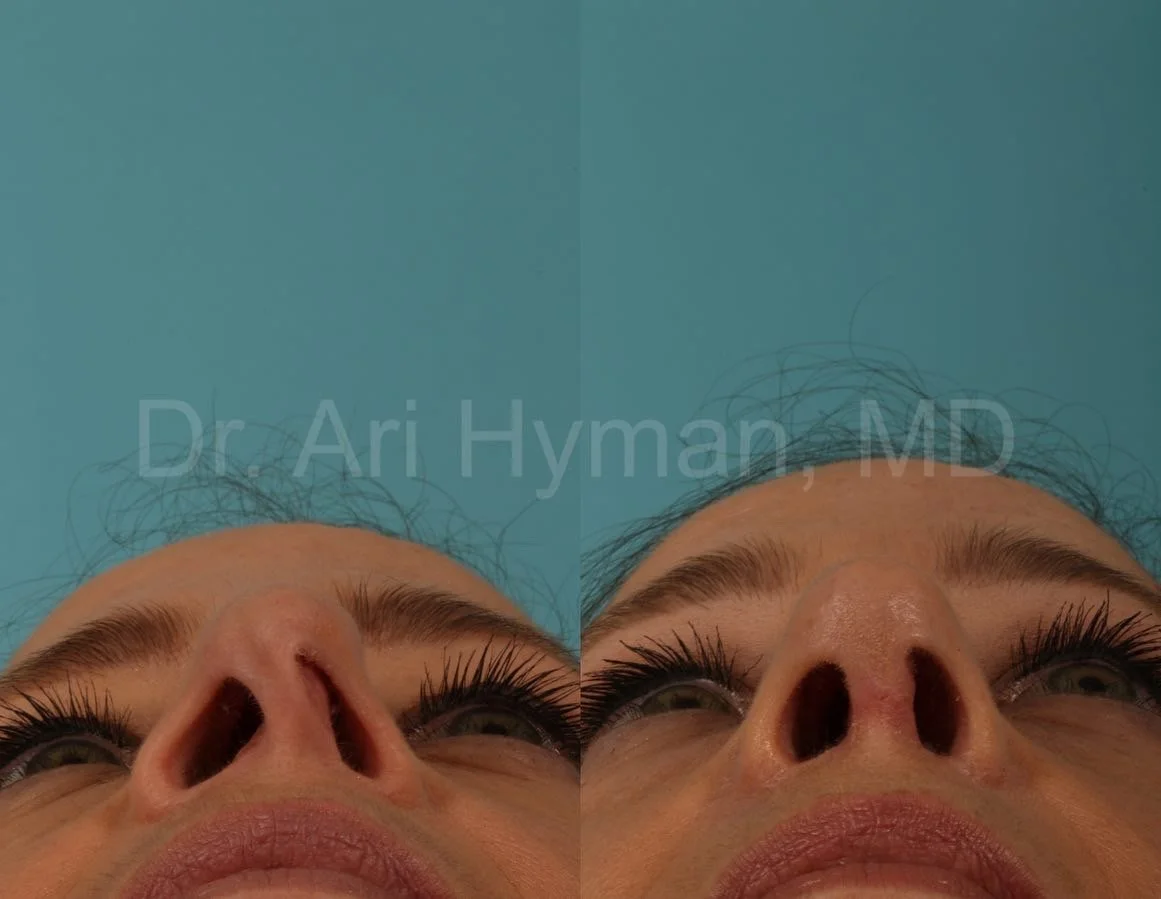
Twisted Nasal Tip: Why It Happens and How I Correct It
A twisted or asymmetric nasal tip is a common concern and one of the more technically challenging issues in rhinoplasty. Even small degrees of tip deviation can make the nose appear crooked or off-center. Correcting it requires precise structural work and control of the underlying cartilage.
Here’s how I diagnose and correct a twisted nasal tip in a predictable, long-lasting way.
Why the Nasal Tip Looks Twisted
A twisted tip is almost always related to underlying structural asymmetry. Common causes include:
naturally asymmetric lower lateral cartilages
a deviated septum
previous trauma
prior rhinoplasty
weak or buckled cartilage
uneven scar tissue
Because the tip is supported by delicate, flexible structures, even small differences can create visible deviation.
Symptoms Patients Notice
tip leaning left or right
nostrils appearing uneven
crookedness that’s worse in photos
tip deviation that increases on smiling
Preference for one side vs the other in photos
My Approach to Twisted Tip Correction
Fixing a twisted nasal tip requires repositioning, reinforcing, and stabilizing the cartilage so it stays centered as it heals onto a stable straight nose and straight septum. Tips deviate mostly due to septal deviations. This is mostly why “only doing the nasal tip” doesn’t really work. Only after the septum is straight can the tip be made straight via:
1. Repositioning the Tip Cartilage
I reshape and realign the lower lateral cartilages to restore symmetry.
2. Septal Extension Graft (SEG)
The SEG acts as a strong central post that allows me to:
place the tip precisely
center it along a straight septum
stabilize it long-term
Who Is a Good Candidate?
You may benefit from twisted tip correction if you notice:
uneven nostrils
a twisted bridge + tip combination
breathing issues
a deviated septum
prior surgery that created or worsened asymmetry
Bottom Line
A twisted nasal tip can be corrected safely and predictably using modern structural rhinoplasty. It requires a straight septum first then, can include septal extension grafts, cartilage repositioning or reshaping, and precise suturing. The key is restoring structural stability to the midline support beam of the nose (the nasal septum) so the tip stays centered for life, not just right after surgery.