
Rhinoplasty Swelling Timeline
What to Expect After Rhinoplasty: The Swelling Journey
Swelling is a normal and expected part of rhinoplasty recovery. While every patient heals differently, the pattern of swelling is predictable — and understanding it makes the process much less stressful.
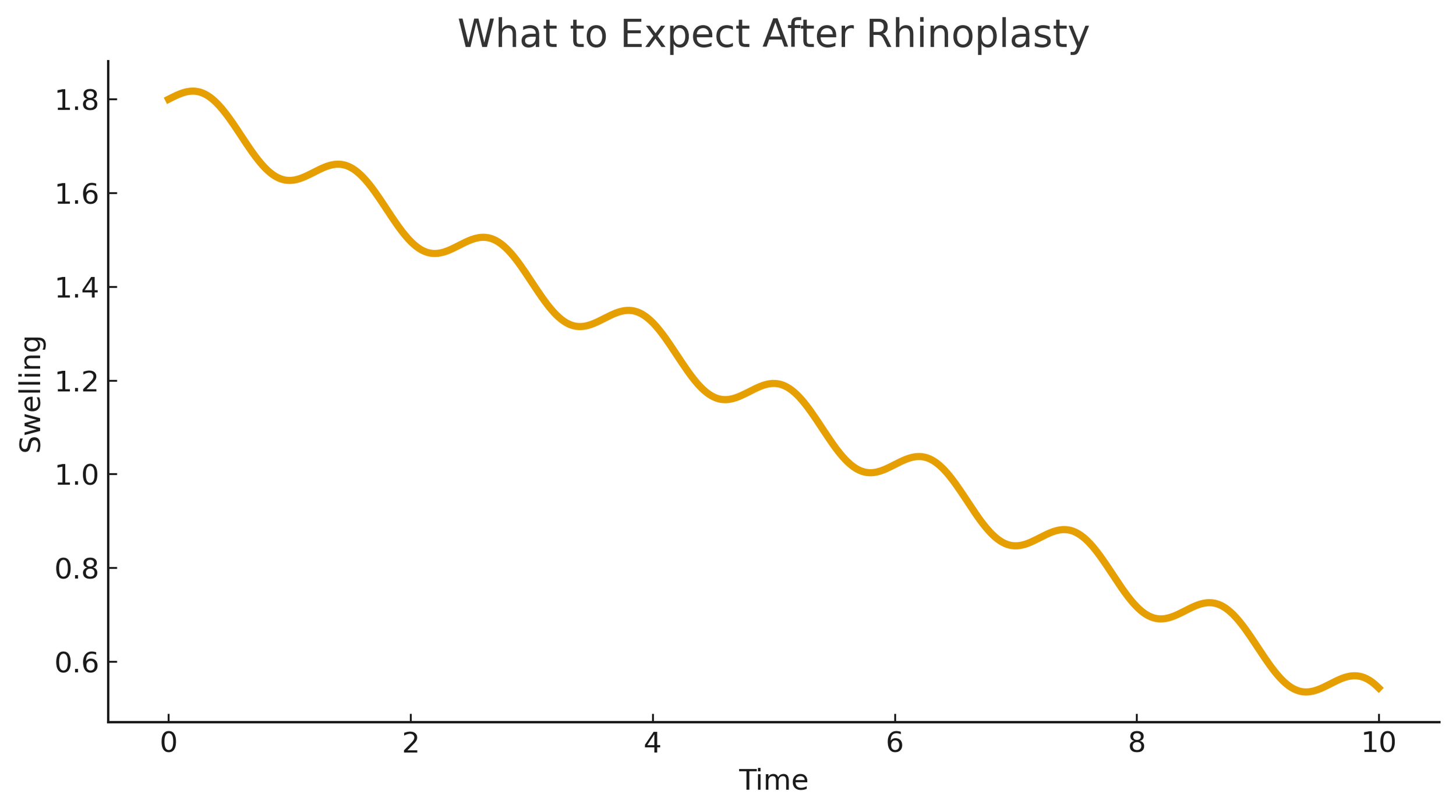
Below is a simplified, easy-to-follow swelling timeline that I share with all my rhinoplasty and revision rhinoplasty patients. SWELLING HAS UPS AND DOWNS BUT IS TRENDING DOWNWARD OVER THE FIRST YEAR AND BEYOND.
Day 1–3: Peak Swelling
Swelling peaks around 48–72 hours
Cheeks, nose, and upper lip feel full
Pressure and congestion are expected
This is the normal inflammatory phase.
Day 4–7: Cast Week
Swelling stabilizes
At cast removal (day 6–8), the nose looks straighter and more defined
A small rebound in swelling is normal
Patients often feel significant relief once the cast is off.
Week 2–4: Presentable Phase
You look presentable to coworkers and friends
you can wear makeup (not on sutures)
MOST PEOPLE HAVE NO BRUISING. IF YOU GET SOME, IT USUSALLY IS 2 WEEKS DURATION.
Swelling shifts from the upper nose to the tip only
Months 2–3: “Studio Ready”
This is when most patients feel comfortable in high-resolution photos.
Bridge shape refines
Tip becomes slimmer
Breathing improves
60–70% of swelling resolved
Thicker skin patients may take longer.
Months 3–12 months: Refinement Phase
Swelling becomes subtle
Profile and tip definition improve
Nostrils settle into symmetry
Breathing continues to improve
Around 6 months, the structure feels more stable.
1 Year: The Mature Result
By one year:
Most swelling is gone
Tip definition is clearer
The nose may soften and feel more natural
Results can still be modulated even at this point with exercises, tape and steroids.
This is when follow-up photos are typically taken.
2–3 Years: Final Result (Especially in Thick Skin)
For patients with thick skin, the tip continues to refine for 2–3 years.
For thin-skin patients, changes become minimal after year one.
Why Swelling Varies Between Patients
Swelling depends on:
Skin thickness
Cartilage strength
Whether this is primary or revision rhinoplasty
Use of rib or not
Natural healing variability
How much structure was rebuilt
Thicker skin = slower, more gradual swelling reduction
Thinner skin = faster definition
Bottom Line
Rhinoplasty healing takes time, but the process follows a predictable pattern. Understanding the swelling timeline helps set expectations — and allows you to follow the journey with confidence. Your nose will look progressively better month after month, with your final result continuing to refine long after the surgery.