
Cadaver vs. Autologous Rib Cartilage
Cadaver vs. Autologous Rib Cartilage in Rhinoplasty: Why I Prefer Using Your Own Rib
Rib cartilage is can be an important material in rhinoplasty and revision rhinoplasty if there inst enough septal cartilage of enough quality or quantity. Patients often ask If i use their own rib or do I use cadaver (donor) rib cartilage.
I use autologous rib cartilage (your own rib) in almost all cases WHEN rib cartilage is needed — and I harvest more than 100 ribs per year. Here’s why.
Why I Prefer Autologous Rib (Your Own Cartilage)
Your own rib cartilage is:
higher quality
healthier and stronger
more predictable
available in larger quantity
can be cut thin but remain STRONG
alive tissue
Comes with critical soft material too, like perichondrium and fascia.
This translates to safer surgery, and more stable long-term results.
My Rib Harvest Technique
I use a modern, minimally invasive approach:
✔ 1.5 cm incision or smaller
heals like a scratch (see photos below).
✔ No cautery
This dramatically reduces postoperative pain, inflammation, and scarring.
✔ Nerve block
Patients wake up comfortable with excellent early pain control.
✔ Minimal trauma approach
Soft tissue is respected and the rib is removed efficiently and precisely.
Because I perform ~100 rib harvests per year, the process is fast, safe, and predictable.
Safety: Extremely Low Risk
My complication rate is exceptionally low, including:
Pneumothorax
I have never had a pneumothorax. The rate here is 0%
With modern technique, this risk is extremely rare.
Warping
Modern shaping methods reduce this dramatically:
oblique split technique
soaking
splinting
controlled carving
My warping rate is very low, thanks to these methods and experience.
Pain & recovery
Very manageable due to nerve blocks
Patients are commonly surprised at how easy the recovery is
Why Cadaver Rib Is Inferior
Cadaver cartilage can be useful in select cases, but it has several limitations:
✖ It is dead tissue
It does not remodel or integrate like living cartilage.
✖ No soft tissue attached
This removes an important element of shaping and stability. We always need soft tissue materials in rhinoplasty.
✖ Must be cut thick to stay strong
If shaped thin, it becomes weak and brittle.
✖ Quality varies
You cannot control the age or condition of the donor cartilage.
✖ Quantity is unpredictable
Often too little material arrives in the package.
✖ Higher resorption risk
Dead tissue may thin out over time.
Cadaver cartilage is acceptable only in limited, specific situations, not as a first choice.
When I Will Use Cadaver Rib
I occasionally use cadaver cartilage:
if a patient strongly prefers to avoid rib harvest after very thoughtful discussion
if a small additional amount of cartilage is needed when we do have some septal cartilage left. It can be used safely for grafts not in the tip in my opinion.
during revision cases where a tiny supplement is required
AGE GREATER THAN 70! I have used this in 70 year olds with excellent quality.
This is rare — autologous rib is overwhelmingly the superior option.
Bottom Line
For complex rhinoplasty and revision rhinoplasty, your own rib cartilage offers the best:
strength
flexibility
reliability
quantity
stability
long-term outcomes
It carves beautifully, resists warping with modern techniques, and provides enough material to rebuild even the most challenging noses.
Cadaver cartilage can work, but it is a backup option, not a primary solution.
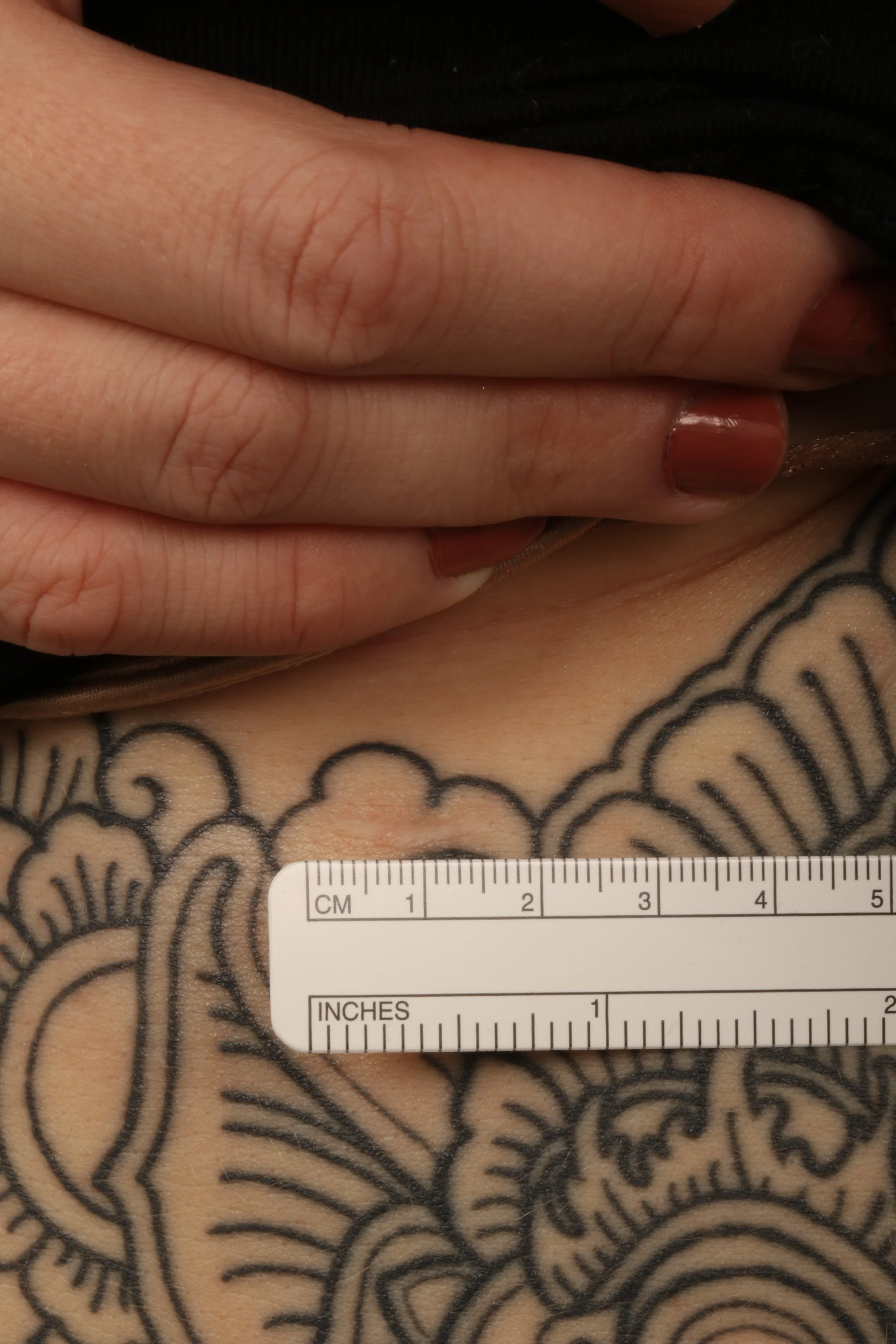
A healed sub 1.5 cm rib incision which was maintained within this patients tattoo.