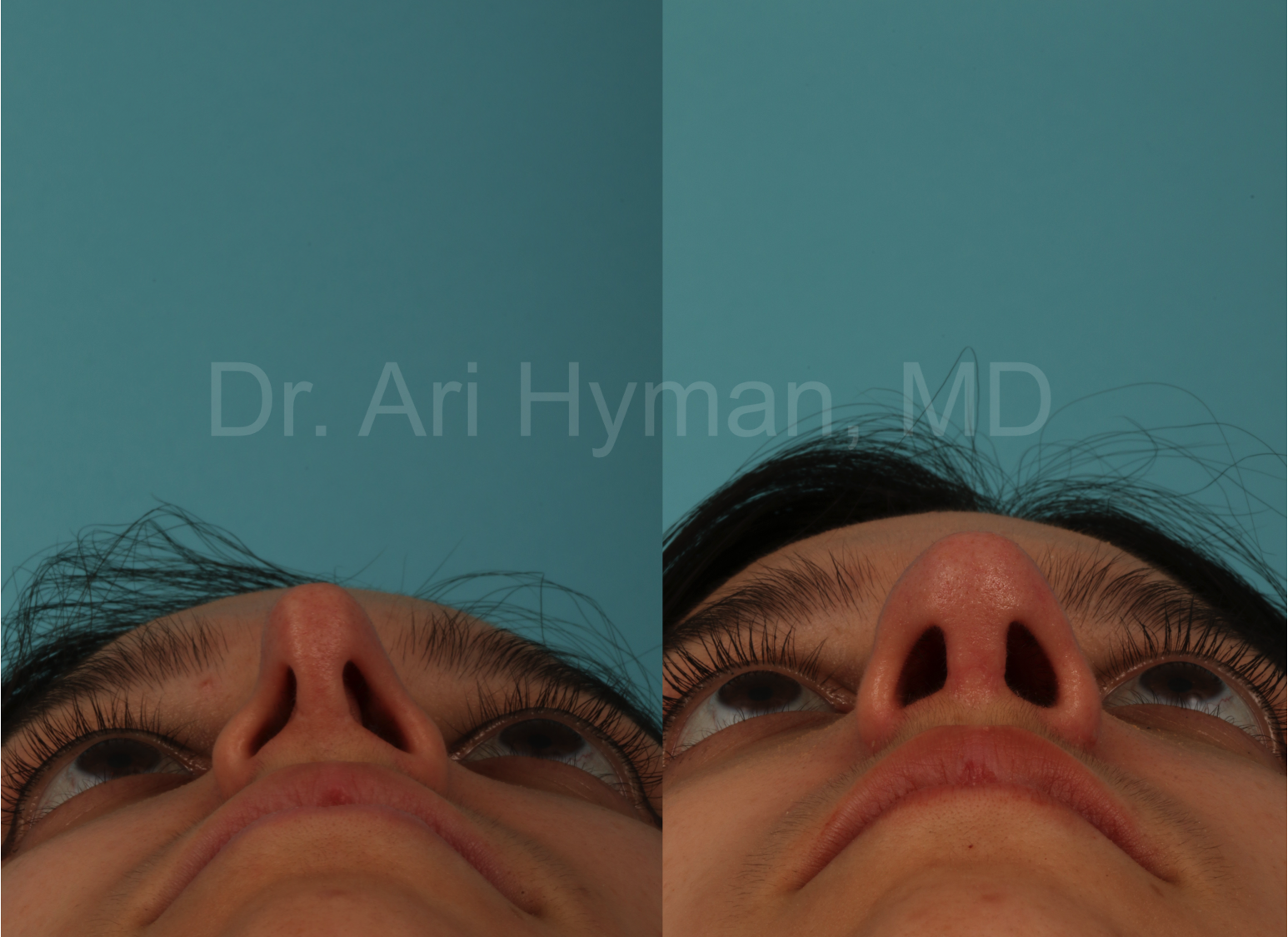
Rhinoplasty for Breathing
Rhinoplasty for Breathing: Form and Function Together
Rhinoplasty should attempt to improve breathing, but at a minimum not compromise it.
Common breathing issues
deviated septum
internal valve collapse
narrow midvault
loss of sidewall support or pinching internally
Bone encroachment
My approach
septoplasty is performed in 100% of my rhinoplasties. 1. you cant have a straight nose without a straight septum. 2. Septum is harvested in most cases so a septoplasty is needed for exposure.
spreader grafts to support the internal valve when narrowing is present or the midvault is opened.
supporting the lateral wall and avoiding pinching and over resection of tip cartilage.
preserving airflow while refining shape
avoiding narrowing long bones into the airway. Turbinate out fracture only to give room for breathing.
Last point -
Traditional septoplasty through the nostrils can generally only address posterior deviations. Crookedness of the leading portions of the septum in the front of the nose near the nostril or high near the bridge must be addressed with a rhinoplasty. That is an unfortunate truth for some patients who don’t want to change the appearance of the nose or have a rhinoplasty, but in this practice for patients in this category (<1% of our practice) we can also do this with excellent preservation of nasal shape.
Bottom line: A well-done rhinoplasty should look natural and breathe well.